Travel Guide
November 13, 2026
The Women Who Shaped Cartagena: Palenqueras, Pioneers and Living Traditions
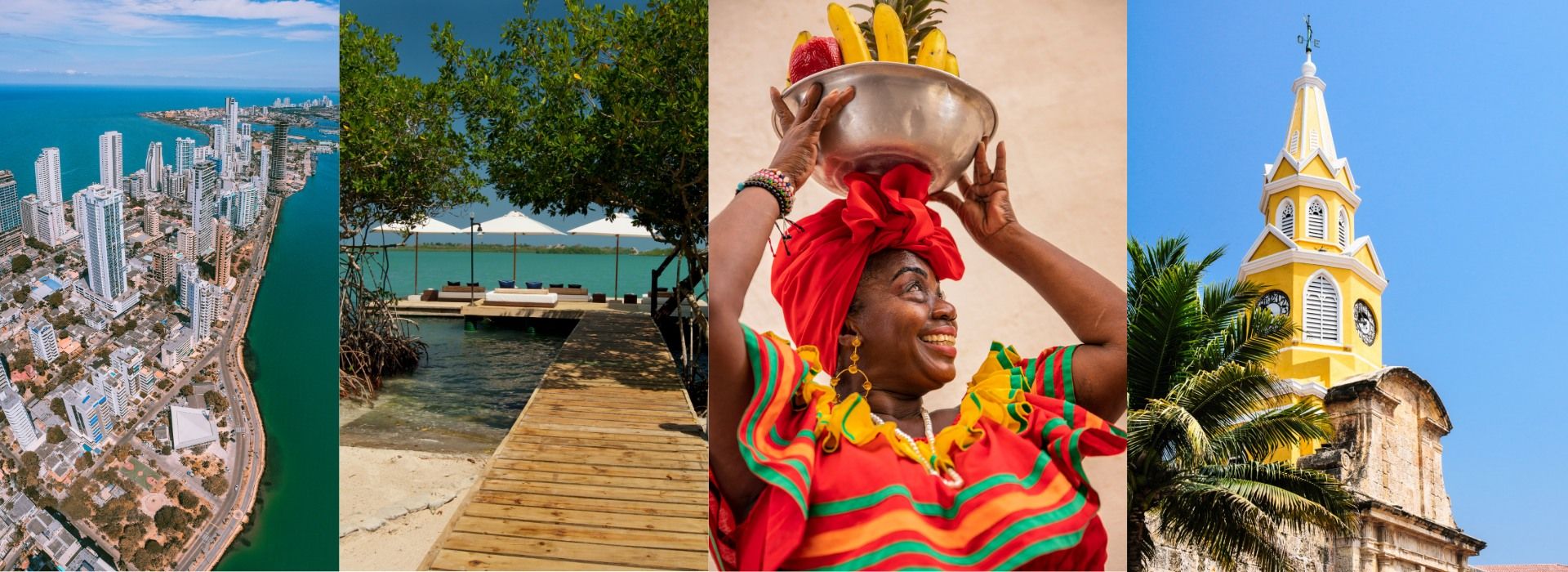
Walk through the Walled City for ten minutes and you'll see them: women in ruffled dresses of yellow, blue and red, balancing bowls of mango, papaya and pineapple on their heads. They're on postcards, airport billboards and half the photos travelers take home from Cartagena.
Most visitors never learn who these women are, where they come from, or why they're one of the most important symbols in Colombia. This guide covers that story and the other women whose history, cooking and craft still shape the city. It also shows how to experience that heritage respectfully on your trip.
The Palenqueras: Living Heritage in the Old City
The fruit sellers of Cartagena are called palenqueras, because nearly all of them come from San Basilio de Palenque, a small town about 50 km southeast of the city in the foothills of the Montes de María.
Palenque was founded by cimarrones: Africans who escaped slavery in colonial Cartagena and built fortified free settlements, called palenques, beyond Spanish reach. The resistance is linked to Benkos Biohó, an escaped African leader who became one of the great freedom figures of the Colombian Caribbean. Palenque eventually won its freedom from the Spanish Crown, which is why it's known as the first free town in the Americas.
Life in a free but isolated village was hard, and the women of Palenque turned to what the land gave them in abundance: fruit and sweets. For generations they walked and later rode into Cartagena each day to sell it. Over time, their bright dresses and the bowls (palanganas) balanced on their heads became the city's most recognizable image.
That image is more than decoration. In 2005, UNESCO proclaimed the Cultural Space of San Basilio de Palenque a Masterpiece of the Oral and Intangible Heritage of Humanity. Palenque kept its own language (Palenquero, a Spanish-based creole with Bantu roots), its funeral rites, music and community structures. The palenqueras you see in Plaza Santo Domingo or by the Clock Tower are carrying all of that into the city.
How to meet the palenqueras respectfully
- Buy something. A cup of cut fruit or a bag of cocadas (coconut sweets) is the best way to start a conversation, and it's how these women support their families.
- Ask before you photograph, and expect to tip. Posing for photos is part of how many palenqueras earn a living today. A few thousand pesos is customary, and agree on it before you shoot.
- Learn their names. Many palenqueras in the historic center belong to an organized cooperative and have worked the same plazas for decades. Ask where they're from; most are proud to tell you about Palenque.
Go Deeper: A Day in San Basilio de Palenque
To understand the palenqueras, go to their hometown. A day in San Basilio de Palenque is one of the most meaningful trips you can take from Cartagena, and it's still far quieter than the city.
On a guided visit with local guides from the community you'll typically:
- Walk the village and hear the history of the cimarrones and Benkos Biohó
- Hear Palenquero spoken and learn a few words
- Experience traditional drumming and music
- Visit the community museum and the statue of Benkos Biohó in the main square
- Share a traditional lunch and try homemade sweets from the women who still make them
Our private Palenque Cultural Tour includes a bilingual guide, private transportation from your villa or hotel, and lunch in the village. It's an easy day trip and a favorite with families, couples and corporate groups.
India Catalina: The Woman at the City's Gate
As you drive from the airport toward the old city, you'll pass a bronze statue of a young Indigenous woman with her arm outstretched. This is India Catalina, and she's the other woman whose image defines Cartagena.
Catalina was an Indigenous girl from Galerazamba, on the coast north of the city. She was taken by Spanish forces as a child and later served as interpreter for Pedro de Heredia, the conquistador who founded Cartagena in 1533. Her story is complicated: she's remembered both as a symbol of the region's Indigenous roots and as a reminder of what the conquest cost the people who were here first.
The statue was made by the Spanish sculptor Eladio Gil Zambrana and unveiled in 1974. Smaller replicas are the trophies of the Cartagena International Film Festival, Colombia's oldest film festival, so "India Catalina" is also the name of the country's best-known film award. Stop by early in the morning for the best light, then continue on foot into the Walled City through the Clock Tower gate.
The Women Behind Cartagena's Food
Caribbean Colombian cooking was built in home kitchens, and many of those kitchens were run by women. Coconut rice, fried fish, arepas de huevo, carimañolas, enyucados and the sweets sold from the palenqueras' bowls are recipes passed down by women from one generation to the next.
That legacy reaches all the way to the top of world gastronomy. Leonor Espinosa, who grew up in Cartagena and studied fine arts and economics here before teaching herself to cook, was named the World's Best Female Chef in 2022 by The World's 50 Best Restaurants. She has described her years in Cartagena, with its blend of African, Indigenous and Spanish cultures, as the foundation of her cooking. Her work championing traditional communities and ingredients also earned her the Basque Culinary World Prize in 2017.
Where to taste it
- The street stalls around the Walled City and Getsemaní, especially for arepas de huevo, patacones and fresh fruit
- The palenqueras' sweets: cocadas, alegrías (sesame and coconut balls) and tamarind candies
- A private chef at your villa. Our private chefs can build a Caribbean menu around these traditional dishes, served in your own courtyard.
For restaurant picks, see our ranking of the 10 best restaurants in Cartagena.
Planning a Women's Trip to Cartagena
Cartagena is one of the most popular destinations in Colombia for girls' trips, bachelorette parties, mother–daughter getaways and solo female travelers. A few tips from our team:
- Stay central. The Walled City and Getsemaní are walkable and lively into the evening, and Bocagrande is good if you want the beach. Our villas put you in the safest, most convenient parts of town.
- Use private transport at night. Pre-booked rides are easier than hailing taxis, especially for groups. See our private transportation options.
- Dress for the heat, and for churches. Light linen and sandals for the streets, and cover your shoulders if you plan to visit the cathedral or San Pedro Claver.
- Plan a day on the water. A private catamaran to the Rosario Islands or Barú is the highlight of most group trips. Browse our yachts.
- Celebrating? See how we plan a Cartagena bachelorette party, from villa to beach club.
Experience the Real Cartagena With Us
The women of Cartagena are its storytellers, cooks, artists and keepers of tradition. When you buy fruit from a palenquera, eat lunch in Palenque or sit down to a coconut-rice dinner made from a grandmother's recipe, you're seeing the city as it really is.
Cartagena VIP plans private cultural tours, villa stays, yacht days and concierge service for travelers who want more than the postcard. Tell us your dates and group size and we'll build your itinerary.
Cartagena VIP
Plan Your Cartagena Trip With Us
Private transport, island tours, luxury villas and a bilingual host, arranged by our team in Cartagena.